Everyone in the solar industry knows this saying: solar panels decide how much electricity you generate, while connectors decide how long your power plant survives.
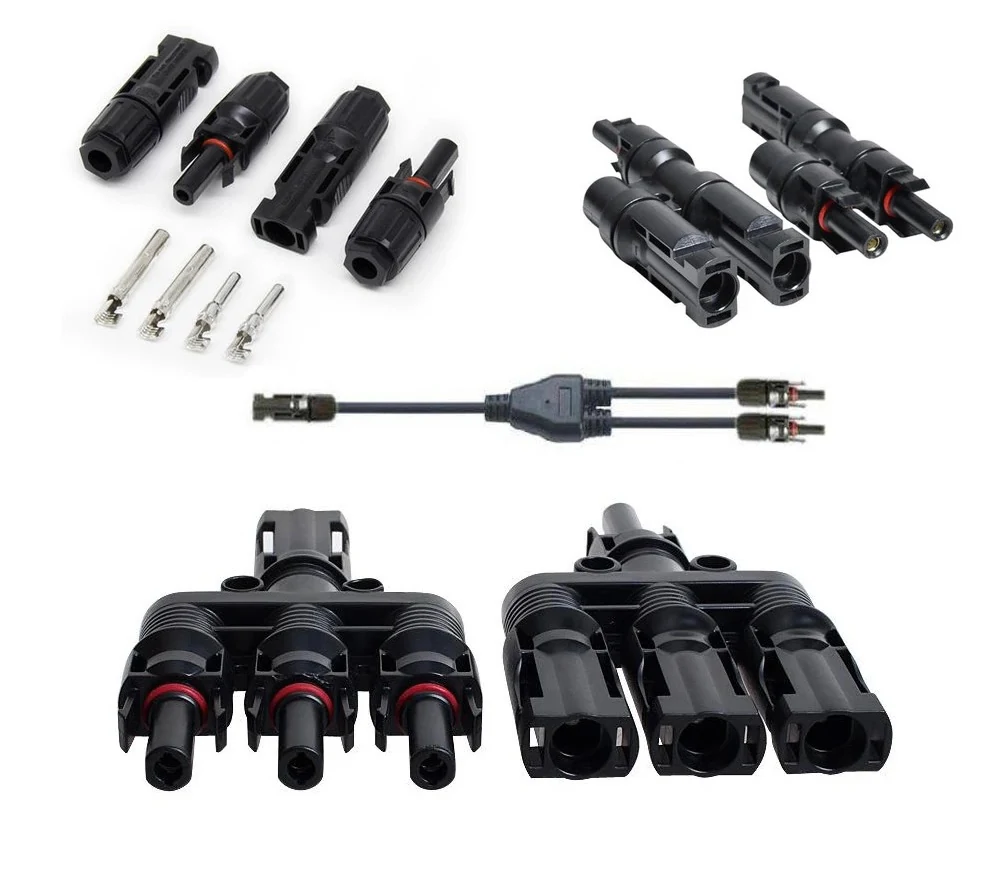
1500V systems have become the mainstream of the industry. Strings of panels are connected one after another, with thousands of MC4 connectors transmitting DC current from solar modules to inverters. That tiny “click” sound during installation marks the dividing line between safety and accident risk.
1. The root cause of connector fire risk: poor contact
Outdoor solar systems face harsh conditions: strong sunlight, big temperature swings, salt spray and dust. Any of the following issues will trigger risks:
- Incomplete insertion
- Non-standard crimping
- Oxidation and corrosion of contacts
- Failed sealing, water and dust ingress
Contact resistance will rise sharply. Following the electrical formula P = I²R: higher resistance generates more heat. Rising temperature further accelerates contact oxidation and loosening, which creates a vicious cycle:
Poor contact → Heat generation → Oxidation → Worse contact → Arc discharge → Fire
Most solar farms do not catch fire suddenly. They run with hidden faults for months. Once strong sunlight or wind shakes the contact surface, an electric arc occurs.
2. 1500V DC arc: it will not self-extinguish
AC power has zero-crossing points where arcs can be cut off naturally, but DC power does not.
Once an arc forms on the 1500V DC side, it keeps burning unless power is cut. The arc temperature can exceed 3000°C, melting plastic housing, cable insulation, module backsheets and roof thermal insulation layers.
MC4 connectors are not USB ports. Fitting together does NOT mean they are safe to use.
3. A common but costly mistake: mixing MC4 connectors from different brands
Field installers often see this scenario: male connector from Brand A and female connector from Brand B. They look identical and can be pushed together easily, so workers treat it as finished.
But they have different internal spring structures, clamping force, contact tolerances and locking mechanisms. Mixed assembly leads to insufficient contact pressure, shallow insertion and degraded sealing performance.
The connector starts overheating after half a year of operation, and yellow burnt casing plus burnt smell appear within one year.
We do not recommend cross-brand mating. There is no such rule as “universal MC4 can be mixed freely”. Both NEC and IEC standards warn against mating connectors of different brands or models. Never gamble your solar plant safety just because they look similar.
4. Data: connectors top the list of auxiliary part complaints
Industry operation statistics show over 38% of solar operation failures are related to connectors, and nearly 25% of rooftop fires are directly caused by faulty connectors. MC4 related issues always rank No.1 among complaints of solar auxiliary materials.
Cost comparison:
- Ordinary universal MC4: ~2 USD per set, few spring strips, thin plating, resistance surges after aging
- Premium MC4-EVO2: ~8 USD per set, MULTILAM multi-contact spring design, contact resistance stays below 0.2mΩ long-term
Saving 6 USD per set may eventually cost you an entire roof, rows of solar panels, an inverter plus fire accident losses. EPC contractors and project owners should understand this cost clearly.
5. Four non-negotiable rules for solar practitioners
1. Reject uncertified no-name products
Only deploy products certified by TÜV / UL / IEC 62852. Do not trust claims like “compatible with standard MC4”.
2. Use the same brand, model and batch for the whole site
Mixing MC4 connectors on one solar plant equals planting hidden hazards. When replacing panels, cables or adjusting designs, always keep connectors consistent.
3. Check installation: listen for the click and perform pull test
Use professional crimping tools instead of pliers. Insert until you hear a clear “click”. Pull the connector gently backward to confirm it cannot be separated.
Follow manufacturer specs for torque of end caps, wire stripping length and sealing ring position.
4. Add protection for harsh environments
For coastal, rooftop, mountain sites with salt spray and high humidity: use protective sleeves, cable trays, infrared thermal inspection and quarterly temperature testing. Add these items into your O&M SOP.
If you wait until the inverter alerts “low insulation resistance”, burnt odors have already appeared.
Final words
The solar industry is competing on price, lead time and profit per watt. But safety standards on the DC side cannot be compromised. Fire will be the final inspector.
A burnt MC4 means more work than just replacing one connector: burnt module backsheet, smoldering roof insulation, factory shutdown, insurance rejection and claims from project owners. EPC contractors will bear all liabilities.
True professionalism in solar is not simply covering rooftops with panels. It is ensuring every string of current stays stable, inspectable and safe.
No one praises you, when panels generate power well, but rooftop fire incidents will leave a permanent record.
Do not wait for a fire to happen, before you take MC4 connector risks seriously.
(References: Industry operation statistics, IEC 62852, NEC 690.33(C), Huayang Lab case studies of mismatched connector failures.)