Introduction
Planning to install solar panels on your rooftop but unsure which type best fits your home, budget, and roof conditions? Many new solar users struggle to tell the differences between mainstream solar panel types and often choose the wrong model for their project.
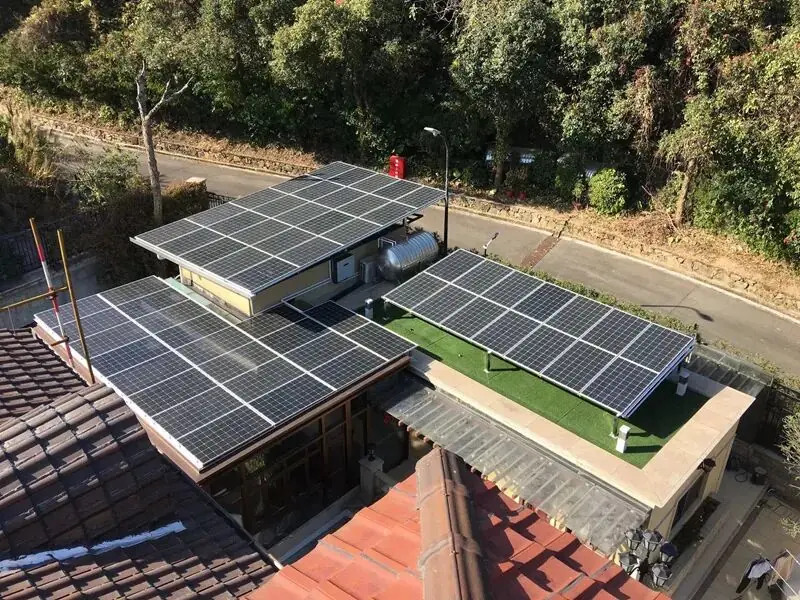
In this guide, we clearly explain the differences between monocrystalline solar panels and polycrystalline solar panels, including working performance, cost advantages, durability, and practical application scenarios to help you make the right choice.
1. What Are Monocrystalline & Polycrystalline Solar Panels?
Monocrystalline Solar Panels
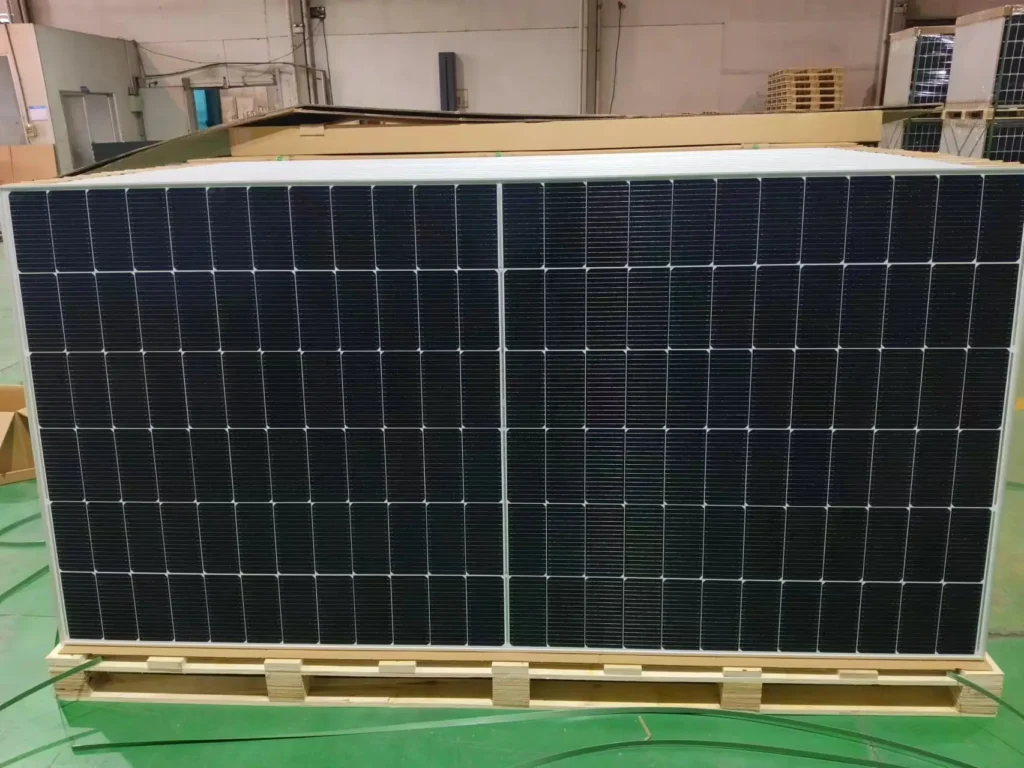
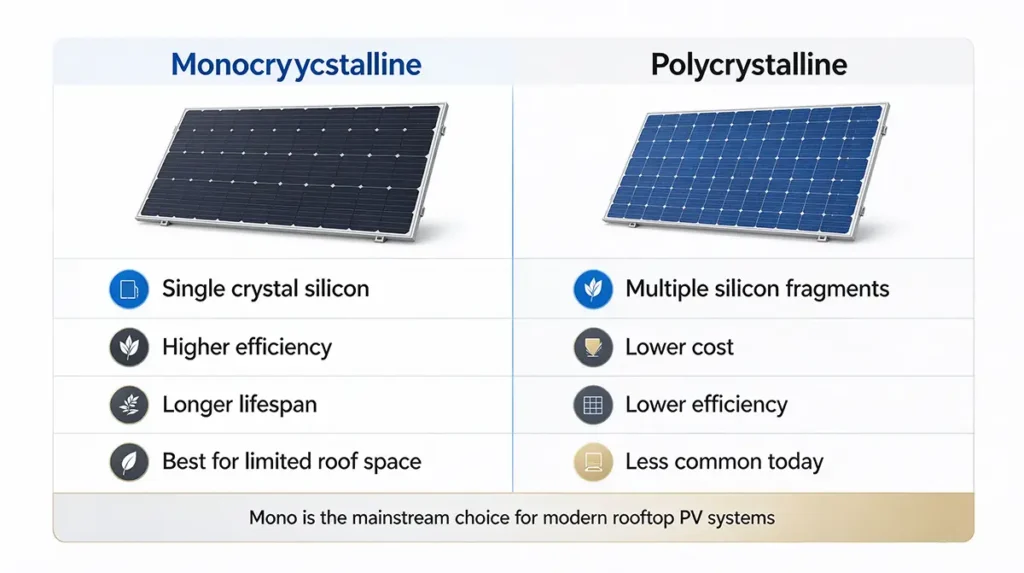
Monocrystalline solar cells are made from a single high-purity silicon crystal. With a unified crystal structure, this type of solar panel delivers higher power output and better energy conversion performance under the same installation area. Compared with polycrystalline panels, monocrystalline models can boost power capacity by 50%–60% in the same space, bringing higher long-term power generation and effectively reducing electricity bills. It is currently the mainstream and most popular solar panel type for modern solar projects.
Polycrystalline Solar Panels
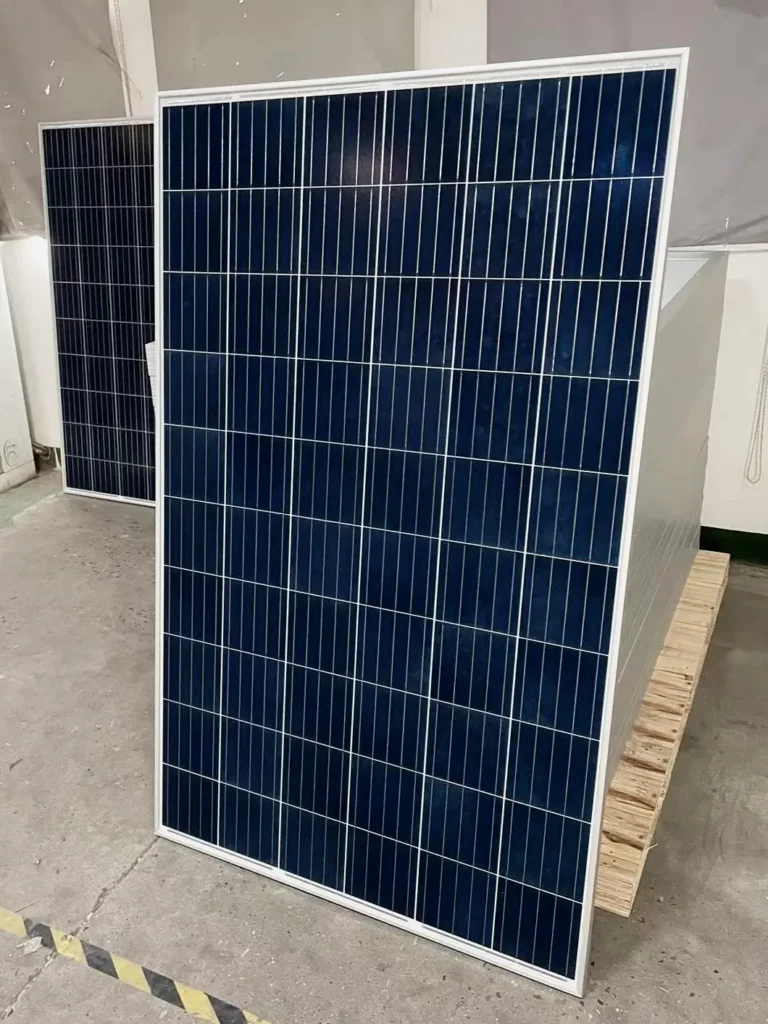
Polycrystalline panels are produced by melting multiple silicon fragments and pouring them into square molds. The manufacturing process is simpler and more cost-effective, making polycrystalline panels cheaper in initial investment. However, due to unstable crystal structure and lower conversion efficiency, polycrystalline solar panels are gradually phased out from the mainstream market. Most new residential rooftop systems and large-scale PV power stations no longer adopt polycrystalline technology.
2. Core Differences Between Monocrystalline and Polycrystalline Panels
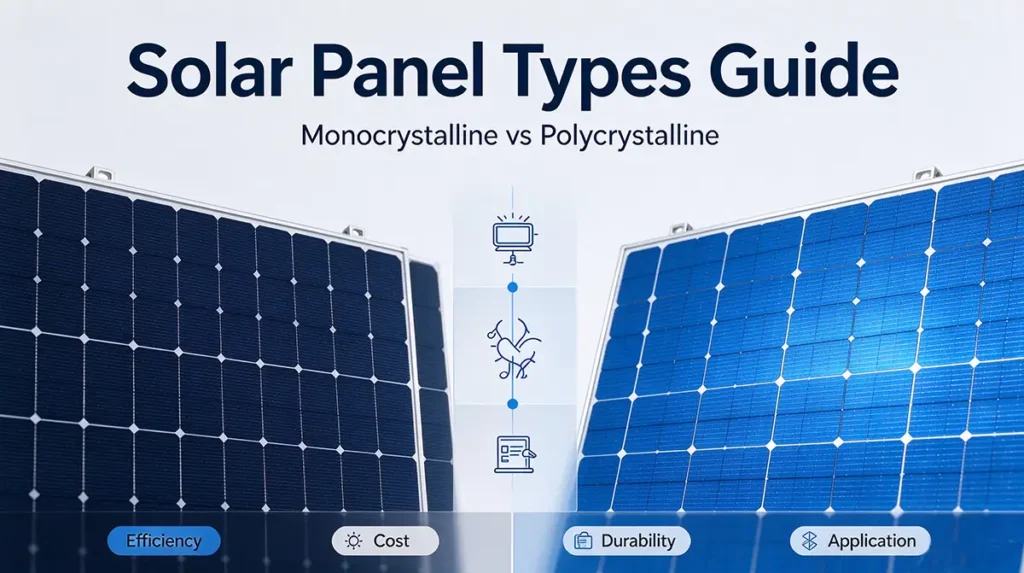
Appearance Difference
- Monocrystalline: Dark blue or nearly black surface color; rounded four corners of the cell pieces, uniform and sleek appearance.
- Polycrystalline: Bright sky-blue color; pure square cell shape with obvious crystal texture.
Conversion Efficiency
In theoretical data, monocrystalline panels are about 1%–3% more efficient than polycrystalline ones. However, in actual outdoor operation, conversion efficiency is not the decisive factor for total power generation. Packaging technology, material quality, cell cracks, sealing performance, and local weather conditions affect real output far more than theoretical efficiency gaps.
Cost & Production Process
- Monocrystalline: Complex production process, higher purity requirements, relatively higher unit cost.
- Polycrystalline: Simple manufacturing process, lower production cost, more affordable initial price.
Power Generation Performance
Many users misunderstand that monocrystalline panels always generate far more power. In fact, the overall power generation depends on installation craftsmanship, packaging quality, material grade, and application environment. High-quality polycrystalline products can also achieve stable output, while low-grade monocrystalline panels may suffer severe power loss.
Attenuation Rate & Durability
In actual long-term usage, the attenuation performance of monocrystalline and polycrystalline panels is similar. Product quality factors such as sealing tightness, impurity control, and hidden cell cracks play a decisive role in aging attenuation. Overall, monocrystalline solar panels feature longer service life, with mainstream manufacturers providing more than 25 years of performance warranty.
Light Adaptability
- Strong sunlight: Monocrystalline panels show higher conversion efficiency and larger power output.
- Low light or cloudy weather: Polycrystalline panels have slightly better low-light response.
3. How to Choose the Right Solar Panel Type?
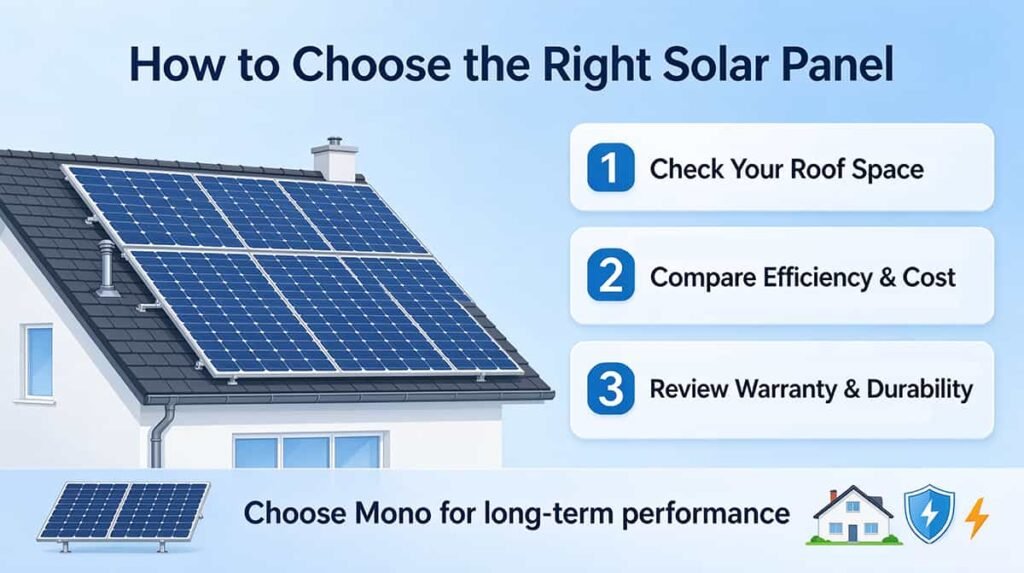
Choose Monocrystalline Solar Panels If:
- Your rooftop area is limited and you need higher power in small space
- You pursue long-term stable power generation and lower electricity costs
- You want a longer service life and better durability
- You install residential or commercial high-standard PV systems
Choose Polycrystalline Solar Panels, If:
- You have sufficient roof space and have a strict low budget
- The project is a temporary or short-term photovoltaic solution
Note: For most formal solar projects in 2026, monocrystalline panels are the priority choice.
Conclusion
Although polycrystalline solar panels have a cost advantage, their low efficiency and unstable performance make them unsuitable for modern long-term solar investment. Monocrystalline solar panels have become the mainstream choice for global residential and commercial solar systems due to their high space utilization, stable power generation, long lifespan, and higher return on investment.
When purchasing solar panels, do not only compare theoretical efficiency or price. Focus more on material quality, packaging process, anti-attenuation performance, and after-sales warranty to ensure long-term stable solar power output.